Isolated Home Care vs. Socializing Group Care: Why Community Is Medicine for Neurological Recovery

Home Care vs Socialized Adult Group Daycare
When a loved one is diagnosed with Alzheimer’s, Parkinson’s, stroke, or related dementia, families across Chicagoland area, Will, Kane, Cook & DuPage County face a critical decision. The natural instinct for many dedicated family caregivers is to protect their loved one by hiring a private 1-on-1 home care aide.
However, emerging clinical research and daily care experience reveal a clear reality: isolation inside four walls—even with dedicated home assistance—can accelerate cognitive and physical decline, all while costing thousands more per month.
1. The Hidden Risk of “1-on-1 Isolation” at Home
Private home care aides perform valuable tasks, but for seniors with neurological conditions, home-bound care often falls short of providing dynamic stimulation:
- Task-Oriented vs. Brain-Stimulating: Home care aides focus primarily on essential physical tasks—prompting medication, basic meal prep, and personal hygiene. Between these tasks, care recipients often spend hours in relative stillness, watching TV or sitting in silence.
- Lack of Novelty: The brain requires environmental variety and social interaction to maintain neural pathways. Without structured group engagement, brain networks experience reduced activation, leading to rapid cognitive “use-it-or-lose-it” degradation.
2. Condition-Specific Functional Advantages of Group Care
Alzheimer’s Disease & Memory Support: Social Mirroring & Orientation
- At-Home Challenge: Memory loss frequently triggers apathy, agitation, and disorientation when a senior spends long stretches alone with a single caregiver.
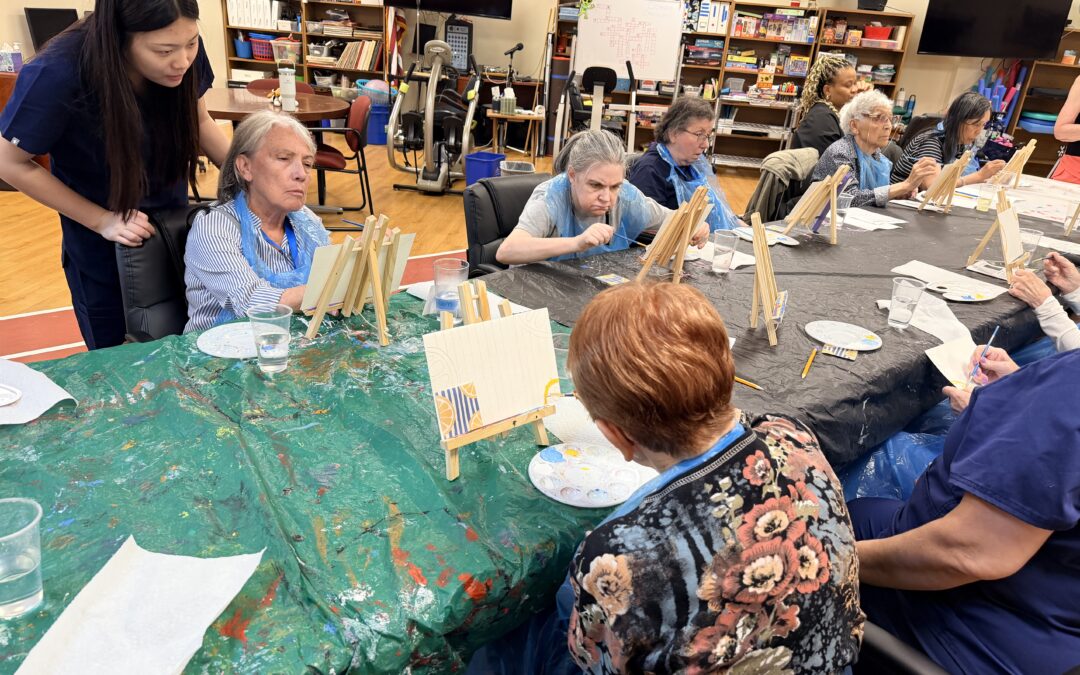
- The NSC Functional Advantage: Structured social mirroring—where members participate in group games, music therapy, and guided discussions—helps re-orient members and lower anxiety. Seeing peers participate encourages active involvement that 1-on-1 home care cannot replicate.
Parkinson’s Disease: Motor Motivation & Vocal Volume
- At-Home Challenge: Parkinson’s reduces speech volume and limits motor mobility, leading seniors to withdraw socially.
- The NSC Functional Advantage: Group movement therapy, chair yoga, and group singing naturally encourage broader physical movements and louder vocal projection through peer dynamics. Members show significantly higher motivation when exercising alongside friends.
Stroke Recovery: Multi-Sensory Neuroplasticity
- At-Home Challenge: Post-stroke rehabilitation relies on neuroplasticity—the brain’s ability to reroute neurological pathways. Isolated home environments offer minimal sensory variety.
- The NSC Functional Advantage: Group socialization requires the brain to process multiple voices, facial cues, and dynamic surroundings simultaneously. This rich, multi-sensory setting accelerates speech and cognitive recovery far more effectively than a quiet living room.
3. The Functional & Medical Advantage: Adult Day Healthcare vs. Home Care
Unlike non-medical home care aides who cannot perform medical tasks, Naperville Senior Center operates under an Adult Day Healthcare model.
- Onsite Licensed Nursing (RNs & CNAs): Daily health monitoring, including blood pressure checks, diabetic monitoring, and professional medication administration.
- Comprehensive Care Services: Access to onsite hygiene support (hot showers/shampooing) and routine wellness checks without having to coordinate separate appointments.
- Commuter-Friendly Convenience: Located right off major transit corridors (I-88 / Ogden / Naper Blvd), making daily drop-offs and pick-ups seamless for working family caregivers.
4. The Cost Advantage: Saving $1,500+ Per Month
Choosing socializing group care is not only better for long-term health—it is significantly more affordable for families.
| Care Comparison | Isolated In-Home Care | Naperville Senior Center (Group Care) |
| Hourly Rate / Cost | $22 – $28+ / hour | ~$15 / hour |
| Daily Cost (10-Hour Day) | $220 – $280 / day | ~$150 / day (Includes meals & nursing) |
| Monthly Estimate (5 Days/Wk) | $4,400 – $5,600 / month | ~$3,000 / month |
| Medical Oversight | Non-medical aide (extra charge for RNs) | Onsite Licensed Nursing (RN/CNA) |
| Meals & Nutrition | Caregiver cooks basic meals | Hot nutritious lunch & snacks included |
| Long-Term Insurance | Varies widely | Covered by most LTCI policies |
The Bottom Line: Families save $1,400 to $2,600 every month compared to full-time home care while providing their loved one with licensed nursing oversight, daily hot meals, and a lively social community.
5. Caregiver Relief & Peace of Mind
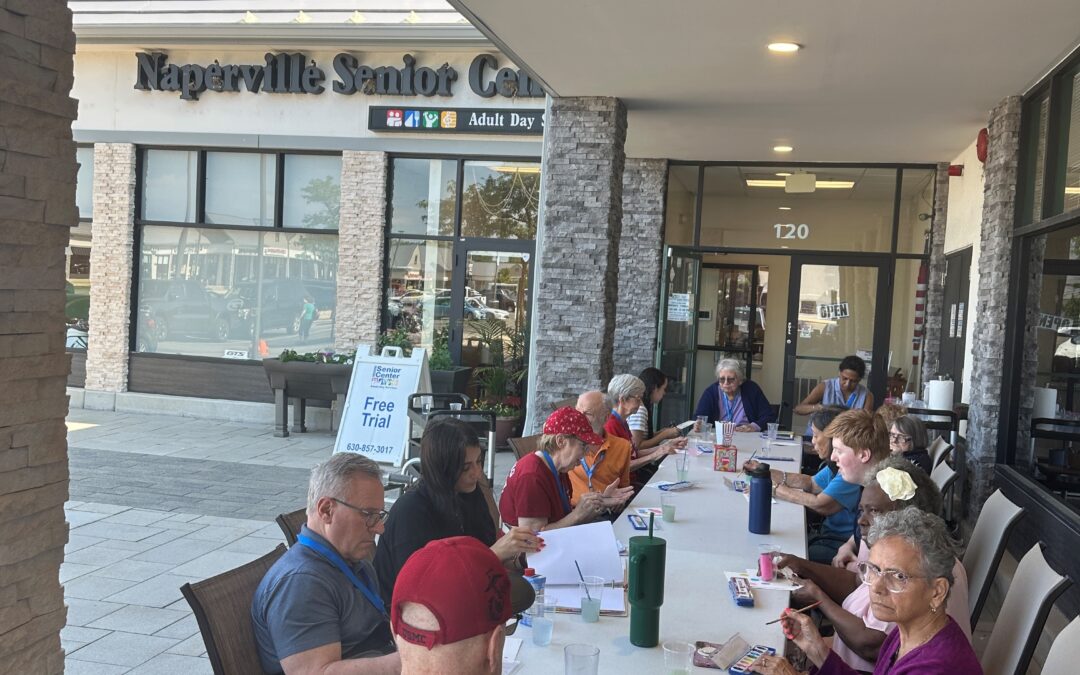
Choosing group care at Naperville Senior Center restores vital life balance for family members. Knowing your loved one is safe, socially active, and professionally monitored by healthcare staff allows adult children and spouses to focus on work, recharge, and eliminate caregiver burnout—ensuring seniors can stay living comfortably at home long-term.
Ready to See the Difference? Schedule Your Free Trial Day
Give your loved one the gift of community, care, and daily joy—while giving yourself complete peace of mind.
- Call Us Directly: Speak with our care team today at (630) 857-3017
- Book a Tour: Visit www.napervilleseniorcenter.com/free-trial-offer/ to schedule a tour of our facility.
- Claim a FREE Trial Day: Experience our Adult Day Healthcare program firsthand with zero obligation.