Facebook Pixel
Why Consistent Attendance Matters in Memory Care | Naperville Senior Center

Why Consistent Attendance Matters in Memory Care | Naperville Senior Center

The Quiet Power of Showing Up

Caregiver commitment to a consistent schedule is one of the strongest predictors of how well a member does in our program — and it asks the most of families in exactly the weeks before it starts to pay off.

There is a moment most families at Naperville Senior Center come to recognize. It usually arrives somewhere in the third or fourth week.

A member who arrived hesitant — scanning the room, asking the same question four times before the coat came off — walks in, hangs up the coat without prompting, and heads toward the same chair they sat in yesterday. No one told them where to go. Something in them already knew.

That moment does not happen by accident. It happens because a caregiver decided that Tuesday and Thursday were non‑negotiable, and then kept that promise week after week, including on the mornings when it would have been easier not to.

What we are seeing on our floor

Across our program, the pattern is consistent enough that our staff can predict it. Members who attend regularly — the same days, at the same rhythm — show up differently than members who attend sporadically.

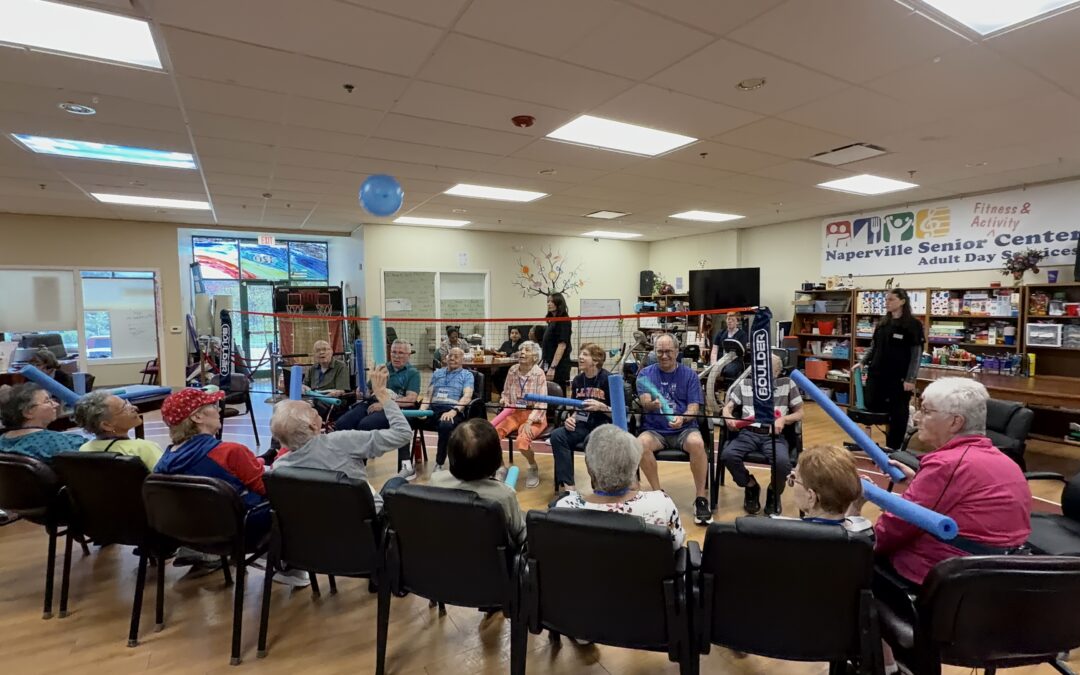
They display more positive emotion. They greet staff by name, or at least by recognition. They enter conversations rather than waiting to be pulled into them. And they show noticeably less confusion during transitions: moving from the activity room to lunch, from exercise to rest, from our building back to the car at pickup.

Members whose attendance is irregular tend to spend a meaningful portion of each visit re‑orienting. Where am I? Who are you? What happens next? That re‑orientation is not wasted time exactly, but it is time not spent engaging. Consistency shrinks that window until, for many members, it closes almost entirely.

Six visits spread across three months build far less than six visits across three weeks.

Why repetition works when recall does not

Dementia does not erase all forms of memory at the same rate. Episodic memory — what happened this morning, who visited yesterday — often declines early and visibly. But procedural and emotional memory are far more durable.

A member may not be able to tell you they attended a program yesterday. But their body can still learn the route to the dining table. Their nervous system can still register a room as safe. Their face can still light up at a familiar voice, even when the name is gone.

This is why our memory care programming is built on repetition rather than novelty. Same arrival ritual. Same morning movement block. Same music cues before transitions. Same faces at the same tables. To an outside observer, the repetition might look unambitious. In practice, it is the mechanism — each repeated cycle lays another layer onto a pathway that still functions, while making fewer demands on the pathways that are struggling.

Movement, breath, and the body’s contribution

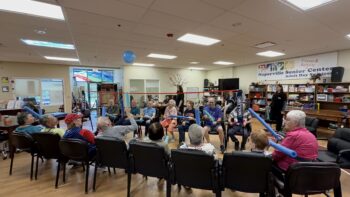
Our fitness programming — chair‑based strength work, guided range of motion, and structured breathing practice — does more than maintain physical condition, though it does that too. Members who participate consistently show improved strength, better balance and agility, and steadier gait during transfers.

The breathing work carries a second benefit that families often notice before we describe it to them. Guided breathing is one of the few self‑regulation tools that remains accessible well into cognitive decline, because it requires no recall and no verbal instruction — only imitation. A member who cannot follow a three‑step direction can still follow a rising and falling hand, and their breathing follows along with it.

The downstream effect shows up in the late afternoon. Members with a consistent movement and breath practice tend to move through the 3:00 to 5:00 PM window — when agitation classically peaks — with less distress. Better regulated bodies support calmer minds, and calmer minds are simply more available for connection.

Does it work for everyone?

Yes — but not at the same speed, and honesty about that matters.

Some members adapt remarkably quickly. Within two weeks they have a chair, a table companion, and a favored activity. Others take considerably longer. We have had members who needed two full months before the room stopped feeling new each morning. Personality, stage of progression, hearing and vision, prior social history, medication changes, and life circumstances all shape the pace.

What we have not seen is a member who attended consistently and gained nothing. The gains differ in size and in kind. For one member it is renewed verbal participation. For another it is simply a face that has softened, a hand that no longer grips the caregiver’s sleeve at drop‑off. Families sometimes discount the second kind. They should not. A person who is not frightened is a person who is available to everything else.

What this asks of caregivers

The hardest part of this is not the program. It is the first three weeks.

In those weeks, a caregiver may hear resistance at the door. They may get a phone call. They may drive home wondering whether they have done something unkind. This is the point at which many families reduce attendance or stop — right before the adaptation they were waiting for would have arrived.

  • Commit to a fixed schedule, not a flexible one. The same days each week beats the same total days scattered around.
  • Give it six weeks before you evaluate. Judging the program at week two is judging the hardest part of it.
  • Keep drop‑off short and warm. Extended goodbyes tend to prolong distress rather than ease it.
  • Tell us what is happening at home. A rough night, a medication change, or a family visit changes how we structure a member’s day.
  • Watch for the small signals. Better appetite, easier evenings, and improved sleep are often the first returns, arriving before anything you would call engagement.

The benefit runs both ways

There is one more piece worth naming plainly. Caregiver commitment produces caregiver relief.

The hours a caregiver gets back are not a side effect — they are part of the picture. A caregiver who has slept, worked, seen a doctor, or simply sat in silence for four hours returns to the relationship with more patience and more warmth. The member feels that. In our experience, the households where the member is doing best are almost always the households where the caregiver is not running on empty.

Commitment, in other words, runs in both directions. And in memory care, that reciprocity may be the most underrated support we have.

See a morning for yourself

Naperville Senior Center provides adult day and memory care programming Monday through Friday, 7:30 AM to 5:30 PM, with a 1:4 staff‑to‑member ratio and a registered nurse on site daily. Tours are available weekdays at 11:00 AM.

Schedule a Tour

Please note: This article reflects observations from our daily practice at Naperville Senior Center along with general information about dementia care. It is not medical advice, and it is not a substitute for evaluation, diagnosis, or treatment by a qualified healthcare professional.

Structured social and physical programming does not stop, slow, or reverse the underlying progression of dementia or any other medical condition. Individual experiences vary, and no particular outcome is promised or implied. Always consult your physician or care team regarding your family member’s specific needs, including before beginning any new exercise or breathing activity.

Isolated Home Care vs Socializing Group Care why Community is Medicine for Neurological Recovery

Isolated Home Care vs Socializing Group Care why Community is Medicine for Neurological Recovery


When a loved one is diagnosed with Alzheimer’s, Parkinson’s, stroke, or related dementia, families across Chicagoland area, Will, Kane, Cook & DuPage County face a critical decision. The natural instinct for many dedicated family caregivers is to protect their loved one by hiring a private 1-on-1 home care aide.

However, emerging clinical research and daily care experience reveal a clear reality: isolation inside four walls—even with dedicated home assistance—can accelerate cognitive and physical decline, all while costing thousands more per month.

1. The Hidden Risk of “1-on-1 Isolation” at Home

Private home care aides perform valuable tasks, but for seniors with neurological conditions, home-bound care often falls short of providing dynamic stimulation:

  • Task-Oriented vs. Brain-Stimulating: Home care aides focus primarily on essential physical tasks—prompting medication, basic meal prep, and personal hygiene. Between these tasks, care recipients often spend hours in relative stillness, watching TV or sitting in silence.
  • Lack of Novelty: The brain requires environmental variety and social interaction to maintain neural pathways. Without structured group engagement, brain networks experience reduced activation, leading to rapid cognitive “use-it-or-lose-it” degradation.

2. Condition-Specific Functional Advantages of Group Care

Alzheimer’s Disease & Memory Support: Social Mirroring & Orientation

  • At-Home Challenge: Memory loss frequently triggers apathy, agitation, and disorientation when a senior spends long stretches alone with a single caregiver.
  • The NSC Functional Advantage: Structured social mirroring—where members participate in group games, music therapy, and guided discussions—helps re-orient members and lower anxiety. Seeing peers participate encourages active involvement that 1-on-1 home care cannot replicate.

Parkinson’s Disease: Motor Motivation & Vocal Volume

  • At-Home Challenge: Parkinson’s reduces speech volume and limits motor mobility, leading seniors to withdraw socially.
  • The NSC Functional Advantage: Group movement therapy, chair yoga, and group singing naturally encourage broader physical movements and louder vocal projection through peer dynamics. Members show significantly higher motivation when exercising alongside friends.

Stroke Recovery: Multi-Sensory Neuroplasticity

  • At-Home Challenge: Post-stroke rehabilitation relies on neuroplasticity—the brain’s ability to reroute neurological pathways. Isolated home environments offer minimal sensory variety.
  • The NSC Functional Advantage: Group socialization requires the brain to process multiple voices, facial cues, and dynamic surroundings simultaneously. This rich, multi-sensory setting accelerates speech and cognitive recovery far more effectively than a quiet living room.

3. The Functional & Medical Advantage: Adult Day Healthcare vs. Home Care

Unlike non-medical home care aides who cannot perform medical tasks, Naperville Senior Center operates under an Adult Day Healthcare model.

  • Onsite Licensed Nursing (RNs & CNAs): Daily health monitoring, including blood pressure checks, diabetic monitoring, and professional medication administration.
  • Comprehensive Care Services: Access to onsite hygiene support (hot showers/shampooing) and routine wellness checks without having to coordinate separate appointments.
  • Commuter-Friendly Convenience: Located right off major transit corridors (I-88 / Ogden / Naper Blvd), making daily drop-offs and pick-ups seamless for working family caregivers.

4. The Cost Advantage: Saving $1,500+ Per Month

Choosing socializing group care is not only better for long-term health—it is significantly more affordable for families.

Care ComparisonIsolated In-Home CareNaperville Senior Center (Group Care)
Hourly Rate / Cost$35 – $42+ / hour~$15.5 / hour
Daily Cost (10-Hour Day)$220 – $280 / day~$155 / day (Includes meals & nursing)
Monthly Estimate (5 Days/Wk)$4,400 – $5,600 / month~$3,000 / month
Medical OversightNon-medical aide (extra charge for RNs)Onsite Licensed Nursing (RN/CNA)
Meals & NutritionCaregiver cooks basic mealsHot nutritious lunch & snacks included
Long-Term InsuranceVaries widelyCovered by most LTC policies

The Bottom Line: Families save $1,400 to $2,600 every month compared to full-time home care while providing their loved one with licensed nursing oversight, daily hot meals, and a lively social community.

5. Caregiver Relief & Peace of Mind

Choosing group care at Naperville Senior Center restores vital life balance for family members. Knowing your loved one is safe, socially active, and professionally monitored by healthcare staff allows adult children and spouses to focus on work, recharge, and eliminate caregiver burnout—ensuring seniors can stay living comfortably at home long-term.

Ready to See the Difference? Schedule Your Free Trial Day

Give your loved one the gift of community, care, and daily joy—while giving yourself complete peace of mind.

Claim a FREE Trial Day: Experience our Adult Day Healthcare program firsthand with zero obligation.

Call Us Directly: Speak with our care team today at (630) 857-3017

Book a Tour: Visit www.napervilleseniorcenter.com/free-trial-offer/ to schedule a tour of our facility.

Why we built our memory care program for 8-10 hours per day

Why we built our memory care program for 8-10 hours per day

When a family comes to us after an early-stage dementia diagnosis, they often think their only options are managing everything at home alone. They may also believe they have to make the difficult, premature decision to move a loved one into full-time residential care. We built our Adult Day Services program because we believe there’s a better middle path. It starts with how we structure the day itself.

Why We Don’t Do Short Visits

We could offer a five-hour drop-in program. Many places do. But we’ve seen what that leaves behind. It causes long unsupervised stretches on either side of a short visit. That’s right where missed medications, wandering, or unsafe moments tend to happen. Confusion and anxiety also tend to build as the day goes on — what’s often called “sundowning.” A brief morning visit does nothing to help with that.

That’s why we’re open Monday through Friday, 7:30 a.m. to 5:30 p.m. A full day, structured the way a workday is structured, gives our Members something familiar and steady to move through. Moreover, it gives the family caregivers in their lives real hours back, not just a quick errand-sized window.

How We Staff and Structure the Day

We designed our program specifically around people with mild to moderate cognitive challenges. This is exactly where we can do the most good. A few things we think matter most:

Caregivers need time to focus on family and career

Caregivers need time to focus on family and career

If you are a caregiver to a senior loved one, you know that you have to invest a lot of time to make sure you are taking care of their needs. Meals, hygiene, doctor’s appointments, other activities…someone has to make sure it all gets done. 

But what about the rest of your family life and your work life? Have they been pushed to the back burner?

Focus on your family.  Whether it’s a ‘date night’ with your spouse/significant other or an activity with your kids, make time for them. Go to the zoo or museum as a family. Or get in a round of mini-golf or laser tag. Do something where you can connect as a family. Make sure your children know you are there for them, no matter what. Even though you want/need to spend time with their grandparent, that doesn’t mean you are not a phone call away – or can be home soon enough to help them with a problem.

kids-caregiver-family-1093758_640But this is also a time to teach your kids some independence.

  • Clothes. Let them pick out their clothes for school the next day. It’s all up to them.
  • Lunches. Maybe you buy the food for lunches, but everyone has a hand in packing their lunch bags. Make it a fun activity that everyone gets involved in.
  • Homework. Set a schedule with respect to when you will be available to help with that. Split it up between yourself and your spouse by subject or by day so everyone is working together.

Focus on your career.  According to AARP, sixty-one percent of caregivers who are 50 and over also have full-time jobs. At that age, you have spent significant time working on your career, whether you are moving up the corporate ladder, are an integral part of a small office or have your own business. Whether it is your passion or you do it simply because you need the money, you are working for a reason. You need to give your job – and the other people at the company – the attention they deserve. Stop putting the promotion off because you take care of Mom, go for it!

startup-caregiver-family-849805_1280There are many ways to make your life a little less stressful while you are working, including:

  • Ask if you can work from home periodically. Many companies will let their employees telecommute, depending on the type of position. You can save quite a bit of commuting time by being able to work from home, time that you can spend with your senior loved one, taking care of your family or yourself!
  • Change your work hours. Is your work day flexible? Can you start a little earlier or later so can better care for your loved one (and your family or yourself!)? Again, some companies have flex hours based on the needs of the employee.

As the old saying goes, ‘If you don’t ask, the answer is always ‘no’.’ So have a conversation with your employer to see what you can do so you can be fully productive but still have the time to be a caregiver. Be prepared with options on how you will increase your productivity. Many employers will surprise you as they may have the same situation in their own family.

It is hard being a caregiver when you have other responsibilities to your family, your career and yourself. That is one of the reasons Naperville Senior Center Adult Day Services is designed for; to create a ‘home away from home’ for your senior loved one AND give the caregiver, you, time to yourself. Whether you need time to be more productive at work, help your kids with their homework, get them to after-school activities or take time for yourself, we provide a safe, fun environment for our Members.

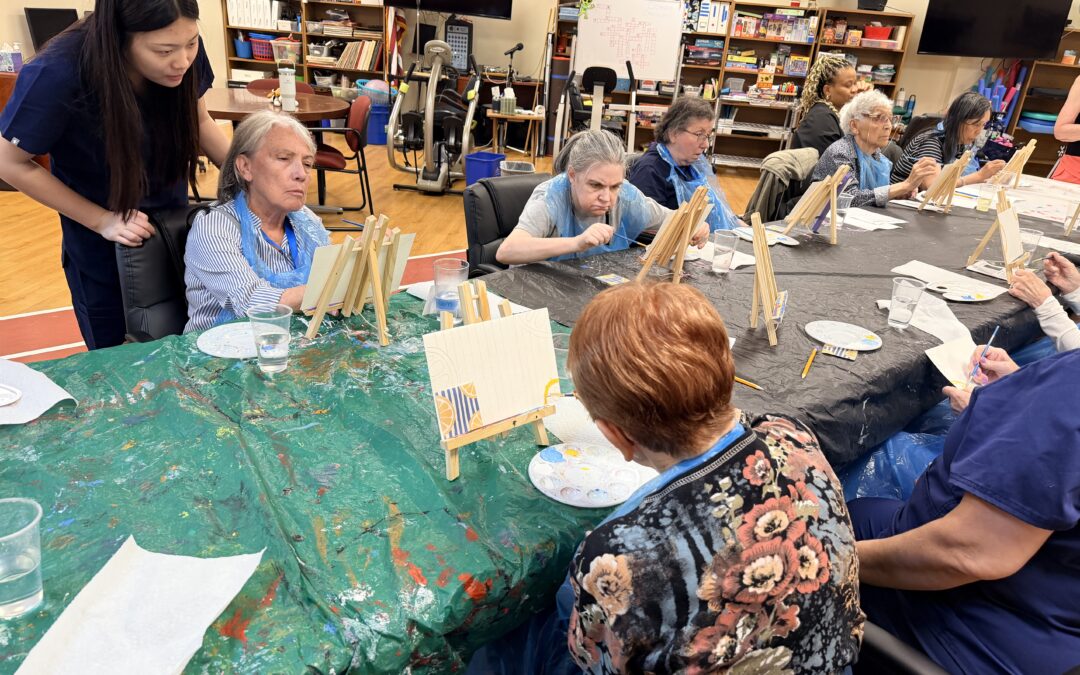
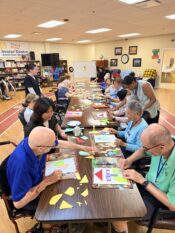
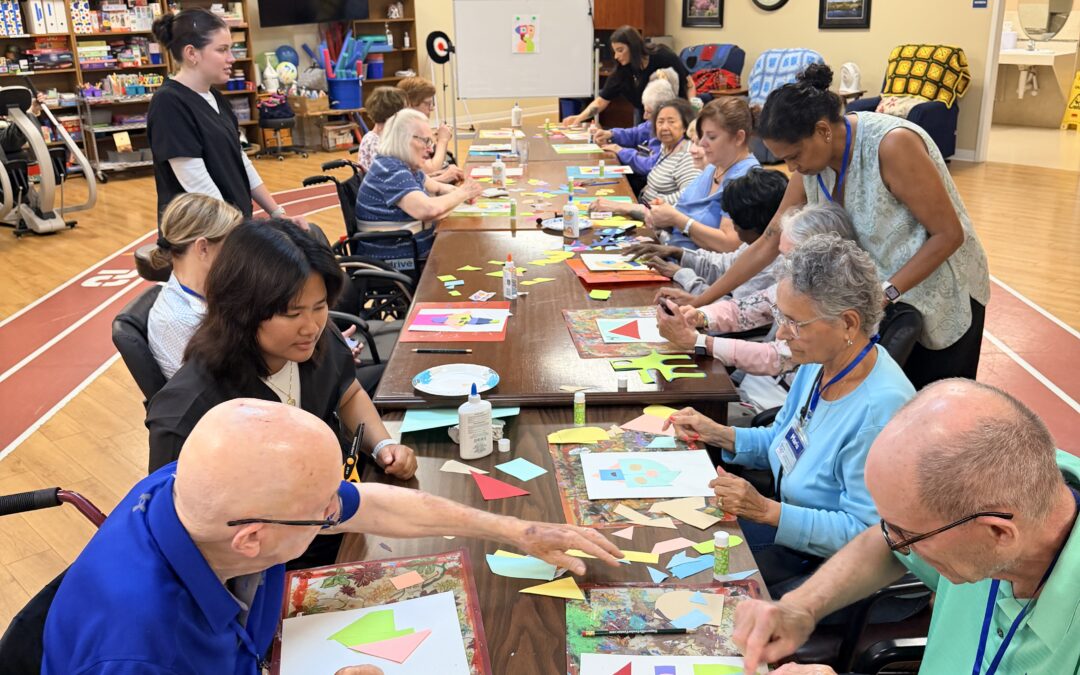
Each day Members spend time socializing, verbalizing, improvising, evangelizing, visualizing, exercising, having fun, and a host of other activities to provide mental and physical stimulation.

Call to action: to learn more about how NSC can provide a respite for you and a great social environment for your loved one, contact us at 630.857.3017. You can also schedule a tour to see what they have to offer and understand the Naperville Senior Center experience, “Home Away From Home.”